
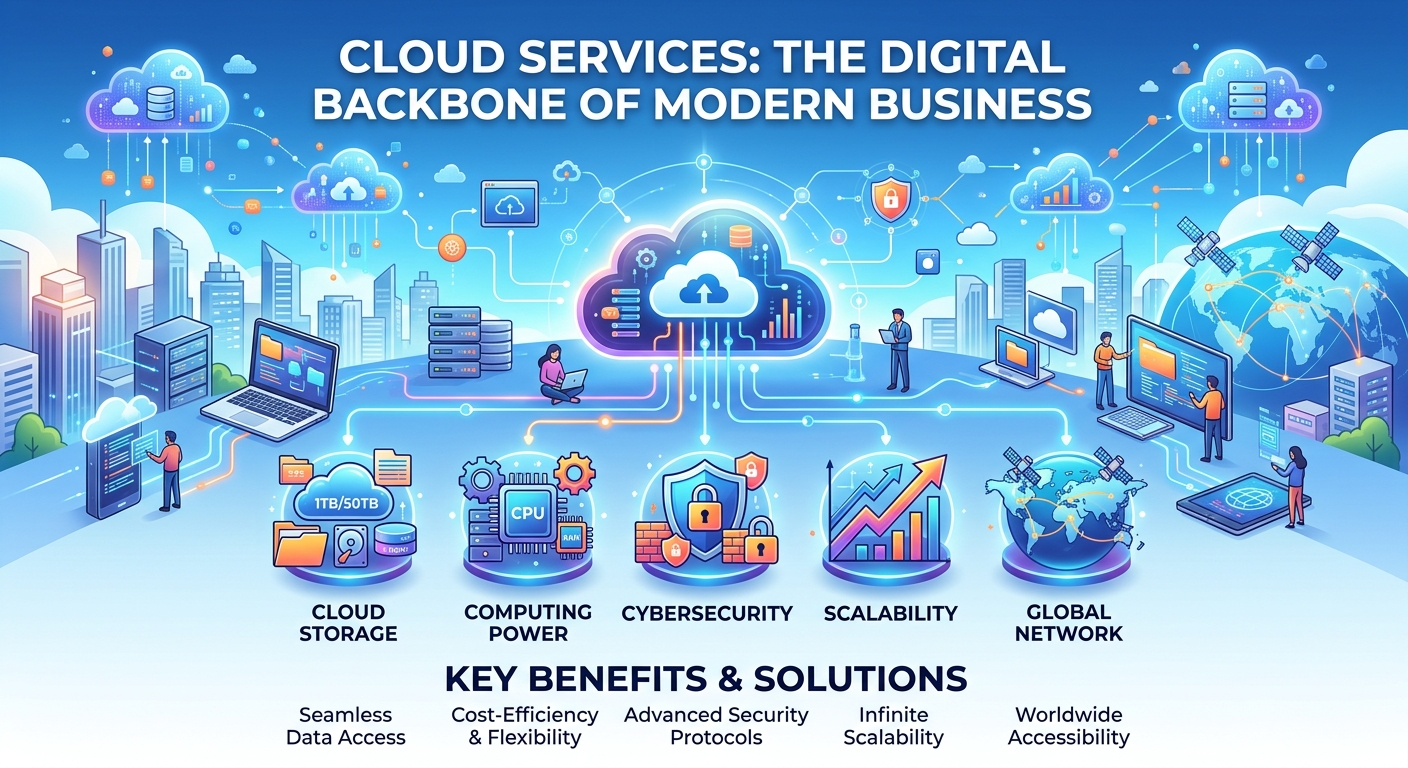
Why Small Businesses in Northwest Florida Struggle to Scale Cloud Services
Why Small Businesses in Northwest Florida Struggle to Scale Cloud Services
If you run a small business in Northwest Florida, you already know growth doesn't happen on a straight line. One month you're slammed with new customers, and the next things slow down again. Your technology is supposed to grow and shrink right along with you. But for a lot of local business owners, that's not how it works out.
Cloud services are supposed to make life easier: no bulky servers in the back office, no huge upfront costs, just software and storage that lives online and grows as you do. In theory, it's the perfect fit for a small business. In practice, business owners across the Panhandle run into the same handful of roadblocks over and over.
Here's what's really going on, and what you can do about it.
What "Scaling Cloud Services" Actually Means for a Small Business
Before getting into the problems, it helps to define the term in plain language. Scaling your cloud services just means your technology keeps up as your business changes: adding more storage when your customer files pile up, giving new employees secure access, or handling more online orders during your busy season without your website crashing.
It sounds simple. For small businesses in this region, it rarely is.
5 Reasons Northwest Florida Small Businesses Struggle to Scale Cloud Services
1. Spotty Internet Outside City Centers
Cloud tools only work as well as the internet connection behind them. In cities like Pensacola, Fort Walton Beach, Destin, and Crestview, business internet is generally solid. But move a few miles outside those hubs, toward more rural parts of the Panhandle, and reliable, high-speed internet gets harder to find. If your connection is slow or unreliable, cloud software lags, uploads time out, and employees get frustrated fast. No amount of cloud technology fixes a weak internet connection.
2. Hurricane Season Puts Extra Pressure on IT Planning
This is a Gulf Coast reality that most cloud providers outside the area never have to think about. Local businesses need systems that can survive power outages, evacuations, and temporary closures, and get back online quickly afterward. That means backup plans, offline access to critical files, and a way to keep customers served even if the office is closed. Planning for that takes extra time, extra cost, and often extra technical know-how that a small team doesn't have sitting around.
3. No In-House IT Staff
Most small businesses in the region don't have a dedicated IT person, let alone a whole department. The owner, office manager, or whoever's "good with computers" ends up handling technology decisions on top of their actual job. Cloud platforms are marketed as easy to use, but choosing the right tools, setting them up securely, and troubleshooting problems still takes real expertise, the kind that's hard to justify hiring for full-time when you're a five- or ten-person company.
4. Tight Budgets Make It Hard to Plan Ahead
Cloud services are often billed as pay-as-you-go, which sounds budget-friendly. But costs can climb quietly as a business adds users, storage, and add-on features, and small business owners in this market tend to run lean. Without someone watching the numbers, a cloud bill that starts at $50 a month can turn into several hundred within a year, with no clear plan for why or how to control it.
5. Security Concerns Without a Security Team
Moving data to the cloud means trusting that it's protected: from hackers, from accidental deletion, from employees clicking the wrong link. Larger companies have IT security teams for this. Small businesses usually don't. That gap makes owners hesitant to fully commit to cloud tools, even when those tools would genuinely make their operations easier and more efficient.
The Real Cost of Staying Stuck
When cloud services don't scale properly, the effects show up in ways that are easy to miss day-to-day but add up fast:
Employees waste time working around slow or clunky systems
Customer data lives in scattered spreadsheets instead of one secure place
The business can't easily add new staff, locations, or services without a tech headache
Owners lose sleep over "what happens if we get hit by a storm, or a cyberattack"
None of this is a reflection of how well the business is run. It's a reflection of how hard it is to get the right technology support in a region where big-city IT providers don't always understand local conditions.
How Small Businesses Can Move Past These Challenges
The good news: none of these problems are permanent. A few practical steps make a real difference.
Work with a local or regional IT provider who already understands Gulf Coast internet limitations and hurricane planning, rather than a national call center that's never dealt with a storm evacuation.
Build a simple backup and recovery plan so files and customer data are safe even if the power goes out or the office closes for a few days.
Start small and add on as needed instead of buying a large, all-in-one platform before you actually need it.
Set a monthly cloud budget and review it every few months so costs don't creep up unnoticed.
Get basic security training for your team, since most breaches start with a simple mistake like a phishing email, not a sophisticated hack.
Growth shouldn't mean choosing between "keep doing things the old way" and "hope the new technology works out." With the right support and a plan built around local realities, small businesses in Northwest Florida can scale their cloud services without the growing pains.
Looking for IT support that understands the challenges of running a small business on the Gulf Coast? Talk to our team about a cloud plan built for Northwest Florida businesses to see where your current setup has room to grow.