How Managed Cybersecurity Protects SMB IT Systems
How Managed Cybersecurity Protects SMB IT Systems
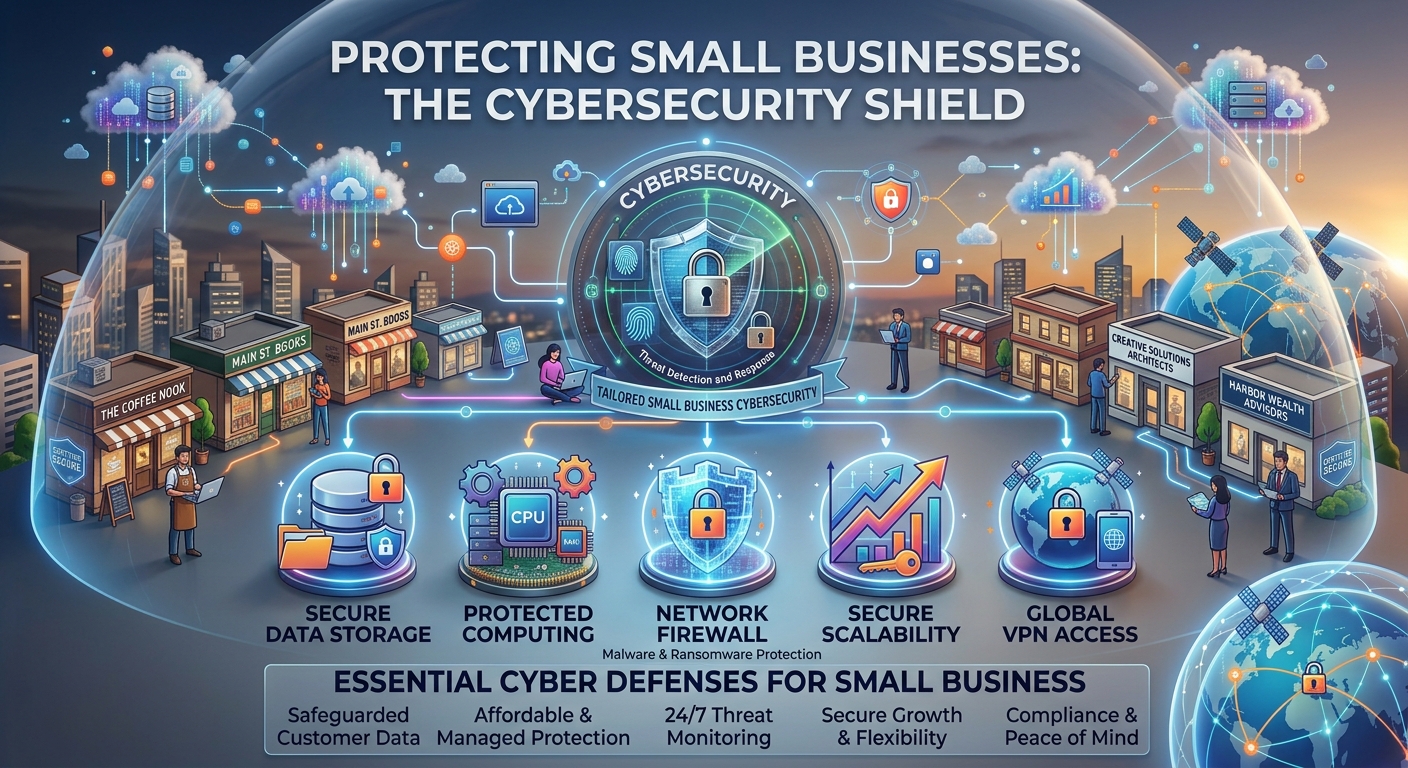
Most small and mid-sized businesses know they need to take cybersecurity seriously. Far fewer have the staff, budget, or time to actually build a security team from scratch. That gap is exactly why managed cybersecurity services exist, and why more SMBs are turning to them every year.
If your business doesn't have an internal security team, this guide walks through what managed cybersecurity actually does, how it protects both your cloud tools and your on premises systems, and what to look for in a provider.
What Is Managed Cybersecurity, in Plain Terms
Managed cybersecurity means outsourcing the day-to-day work of protecting your business technology to a specialized outside team. Instead of hiring full-time security staff, you get access to expert monitoring, protection, and support on a subscription basis, similar to how you might outsource payroll or accounting instead of running that department in-house.
The provider watches your systems around the clock, looks for suspicious activity, blocks threats before they cause damage, and helps you recover quickly if something does go wrong.
Why SMBs Without an Internal Security Team Are Prime Targets
It's a common myth that hackers only go after large corporations. In reality, smaller businesses are often targeted precisely because they're easier to break into. Attackers know that SMBs typically have:
No dedicated IT security staff watching for threats
Fewer safeguards like advanced firewalls or intrusion detection
Employees who haven't had formal security training
A mix of cloud apps and older on premises equipment that doesn't always talk to each other securely
That combination makes small businesses an attractive, lower-effort target, even though the financial and reputational damage from an attack can be just as devastating as it would be for a larger company.
How Managed Cybersecurity Protects Cloud and On Premises Systems
1. Round-the-Clock Monitoring
A managed security provider watches your network, devices, and cloud accounts continuously, not just during business hours. Threats don't wait for 9 to 5, and neither does the monitoring. If something unusual happens at 2 a.m., someone is actually watching for it.
2. Threat Detection and Response
Rather than just installing antivirus software and hoping for the best, managed cybersecurity uses tools that actively look for signs of an attack in progress, like unusual login attempts, unexpected data transfers, or malware trying to spread across your network. When something is flagged, the provider can respond immediately, often before you'd even notice a problem on your own.
3. Patch Management and Updates
A huge number of breaches happen because software wasn't updated with the latest security fix. Managed providers keep track of updates for your operating systems, applications, and cloud platforms, and apply them on a regular schedule so known vulnerabilities get closed quickly instead of sitting open for months.
4. Securing the Cloud-to-Office Connection
Most SMBs today run on a mix of cloud software and physical, on premises equipment like servers, printers, and point-of-sale systems. That mix creates gaps if it isn't managed carefully. Managed cybersecurity providers set up secure connections between your cloud accounts and your physical office network, so data moving between the two stays protected the whole way.
5. Employee Security Training
Since many attacks start with a single employee clicking a bad link, managed cybersecurity often includes simple, ongoing training to help your team spot phishing emails and other common scams. This is one of the most cost-effective protections available, and it doesn't require any technical background to be effective.
6. Backup and Disaster Recovery
If an attack does get through, or if a storm knocks out power and equipment, managed providers make sure your data is backed up and recoverable. That means less downtime, less lost revenue, and a much faster path back to normal operations.
Signs Your Business Needs Managed Cybersecurity
Not sure if it's time to bring in outside help? These are common signals it's worth exploring:
You've never had a professional security assessment done
Your business handles customer payment information, health records, or other sensitive data
Nobody on your team currently monitors for security threats
You've experienced a phishing attempt, ransomware scare, or suspicious login in the past year
Your IT setup includes older, on premises equipment alongside newer cloud tools
If any of these sound familiar, it's a strong sign your current setup has more exposure than you'd like.
What to Look for in a Managed Cybersecurity Provider
Not all providers offer the same level of protection. When comparing options, look for:
24/7 monitoring, not just business-hours support
Experience securing both cloud platforms and on premises systems
Clear reporting you can actually understand, not just technical jargon
A documented plan for how they respond to an active threat
References or case studies from other small businesses, not just enterprise clients
The Bottom Line
You don't need an in-house security team to have real protection. Managed cybersecurity gives SMBs access to the same level of monitoring, threat response, and expertise that larger companies rely on, without the cost of building that department yourself. For a small business juggling everything else on a daily basis, that kind of support isn't a luxury. It's what keeps the business running when something goes wrong.
Not sure where your current security setup has gaps? Talk to our team about a managed cybersecurity plan built for your business to see what's actually protecting your systems today.