
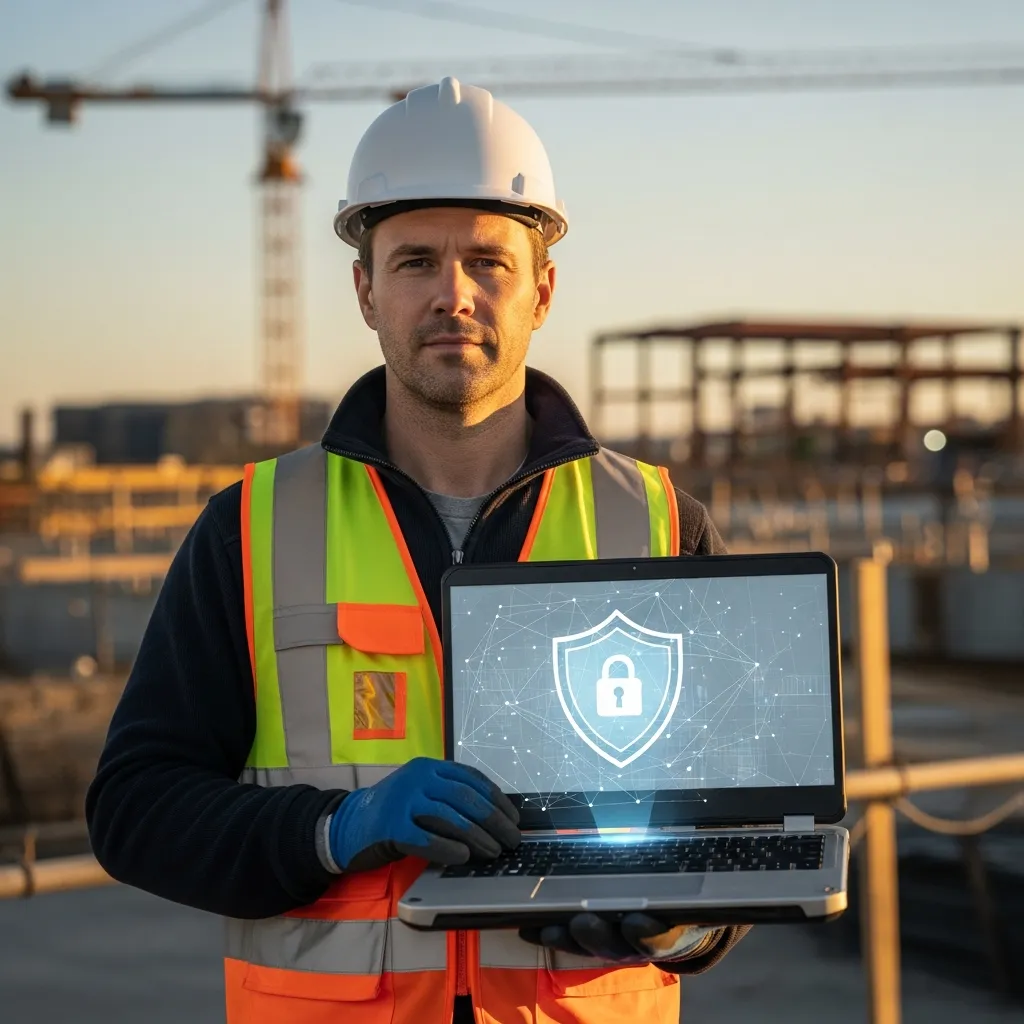
What Is Construction Cyber Security in 2026
What Is Construction Cyber Security in 2026? A Simple Guide for Builders
If you run a construction company, you've probably spent years worrying about hard hats, cranes, and job site accidents. But there's a newer risk sneaking onto every project: hackers. Construction cyber security is quickly becoming just as important as wearing a hard hat, and most builders aren't ready for it.
In this guide, we'll break down what construction cyber security actually means, why it matters more than ever in 2026, and what you can do about it. No tech degree required.
What Does Construction Cyber Security Mean?
In plain terms, construction cyber security is the practice of protecting your company's digital information, including project plans, contracts, financial records, employee data, and building designs, from people who want to steal, lock up, or misuse it.
Think of it like the digital version of locking your job site trailer at night. Except instead of protecting tools and materials, you're protecting computers, apps, and the connected devices now common on modern job sites, like building information modeling (BIM) software, internet-connected equipment, and cloud-based project management tools.
Construction used to be a low-tech, hands-on industry. Not anymore. As firms adopt digital design tools, connected machinery, and cloud software, they've unintentionally opened up new doors for criminals to walk through.
Why Construction Companies Are a Growing Target
You might assume hackers go after banks or tech companies. Increasingly, they're going after builders instead, and the numbers back that up.
Construction is now ranked among the top four most-targeted industries for ransomware attacks worldwide.
Cyber threats aimed at the construction industry jumped 23% in a single year, with potential losses across the global industry reaching an estimated $1.2 trillion.
A recent industry survey found construction and property leaders had the lowest confidence of any sector when it came to being ready for a cyberattack.
Why is construction such an easy target? A few reasons come up again and again: outdated computer systems, weak security habits, complicated networks of subcontractors and suppliers, huge amounts of sensitive data, and large money transfers moving between parties. Put simply, builders often handle serious money and sensitive information, but haven't invested in the digital locks to match.
5 Common Cyber Threats Facing Construction Companies
You don't need to memorize technical jargon to protect your business. You just need to recognize the most common tricks criminals use. Here are the five to watch for:
Ransomware. This is when criminals break into your computer systems, lock up your files, and demand a payment to unlock them. Attackers typically go after project files, financial systems, and day-to-day operational data, then hold them hostage for money. It's the single most costly cyber threat facing builders today.
Phishing emails and scam calls. These are fake emails, texts, or phone calls designed to trick an employee into clicking a bad link or handing over a password. Criminals are getting smarter with these scams, using more convincing social engineering tricks that target both employees and outside vendors.
Fake wire transfer requests (invoice fraud). A scammer poses as a supplier, subcontractor, or even your own executive and asks for an urgent payment to a new bank account. Fraudulent wire transfers are one of the most common and most expensive attacks construction firms face.
AI-generated scams. Criminals are now using artificial intelligence to write more convincing fake emails and even clone people's voices on phone calls. Security experts are urging construction firms to train staff to recognize AI-generated phishing attempts and voice-cloning scams, and to set up a secret code word for verifying sensitive requests.
Attacks through connected job site equipment. Modern job sites use drones, sensors, and internet-connected machinery. Every connected device on a site, from a drone scanning a foundation to a tablet in a foreman's hands, is a potential doorway for a criminal to slip through.
Real Consequences: This Isn't Just an "IT Problem"
It's tempting to think a cyberattack is something your IT person deals with quietly in the background. In reality, an attack can shut down an entire project. Construction firms that don't invest in security ahead of time risk being unable to compete for new work, unable to get insured, and vulnerable to attacks that stop operations in their tracks.
Attacks aren't hypothetical, either. In February 2026, ransomware groups publicly claimed attacks against several U.S. construction firms, stealing employee records, financial data, and project files. And it's not a one-time event: construction and property firms made up 7.4% of all ransomware attacks worldwide in 2025, with 142 confirmed incidents in the industrial sector in just one quarter.
Simple Steps to Protect Your Construction Business
The good news: you don't need a massive IT budget or an in-house security team to make real progress. Here's where to start.
Train your team to spot scams. Most attacks start with one employee clicking the wrong link. A short, regular training session can go a long way.
Set up a verification code word. Before wiring money or sharing sensitive data, confirm the request is legit, especially with AI voice scams on the rise.
Back up your project data regularly. If ransomware locks your files, a recent backup means you don't have to pay to get them back.
Limit who can access what. Not every employee needs access to every file. Give people only what they need for their role.
Work with a security partner who understands construction. General IT support isn't the same as construction-specific cybersecurity. Look for a partner familiar with job site technology, BIM software, and subcontractor networks.
Ask about compliance requirements early. If you bid on government or defense-related projects, you may need to meet specific security standards. Firms that get ahead of these certification requirements often gain a competitive edge over rivals who wait.
The Bottom Line
Construction cyber security isn't a future problem. It's already here, and it's growing fast. As job sites become more connected through drones, smart equipment, and cloud-based project tools, protecting your digital information matters just as much as protecting your physical site. The builders who take a few proactive steps now, like training staff, backing up data, and working with the right security partner, will be far better positioned than those who wait for an attack to force the issue.